
JIUN Staff,
JANUARY 19, 2026
Understanding Diamond:
The 4Cs for the Modern Buyer
Diamonds are often described as timeless, yet few gemstones are more misunderstood. While the industry has long relied on the 4Cs—cut, color, clarity, and carat weight—true diamond value is rarely defined by numbers alone.
For the modern buyer, understanding diamonds means moving beyond charts and certificates, and toward discernment, balance, and long-term wearability. This article unpacks the 4Cs not as rules, but as tools—helping you choose a diamond that feels right, not merely one that grades well.
Why Diamonds Remain Unmatched
Diamonds are the hardest natural material known, formed under immense pressure over billions of years. This durability makes them uniquely suited to everyday jewelry, particularly engagement rings intended to be worn for a lifetime.
Yet durability alone does not explain their enduring appeal. Diamonds have become symbols of commitment and continuity precisely because they are rare, resilient, and capable of carrying meaning across generations.
The 4Cs Explained—Without the Noise
The 4Cs were developed to create a common language for evaluating diamonds. While useful, they are often misunderstood when applied rigidly or in isolation.
Understanding how the 4Cs interact is far more important than optimizing any single factor.
Cut: The Foundation of Brilliance
Cut is the most important of the 4Cs.
Unlike color or clarity, cut is entirely shaped by human craftsmanship. It determines how light enters, reflects, and exits the diamond—directly influencing brilliance, fire, and sparkle.
A well-cut diamond can appear larger, brighter, and more lively than a heavier stone with inferior proportions. For this reason, cut should always be prioritized when selecting a diamond for fine jewelry.
Color: Subtlety Over Absolutes
Diamond color grading measures the absence of color, typically on a scale from D (colorless) downward. In practice, the difference between adjacent grades is often imperceptible once a diamond is set.
Rather than chasing the highest possible grade, experienced buyers consider how color interacts with setting choice, metal tone, and overall design. A near-colorless diamond can appear just as refined—and often more harmonious—than a strictly colorless stone.
Clarity: What You See Matters More Than What You Read
Clarity assesses internal inclusions and surface features. While higher clarity grades indicate fewer characteristics, most inclusions are invisible to the naked eye.
An eye-clean diamond—one that appears clean without magnification—can offer exceptional value and beauty. Inclusions become relevant primarily when they affect durability or visual performance.
Carat Weight: Size in Context
Carat weight measures a diamond’s mass, not its visual size. Two diamonds of the same carat weight can appear dramatically different depending on cut proportions.
Rather than focusing solely on carat numbers, consider how the diamond presents once set. Balance and proportion often create a stronger visual impact than raw size.
Diamond Shapes and Personal Expression
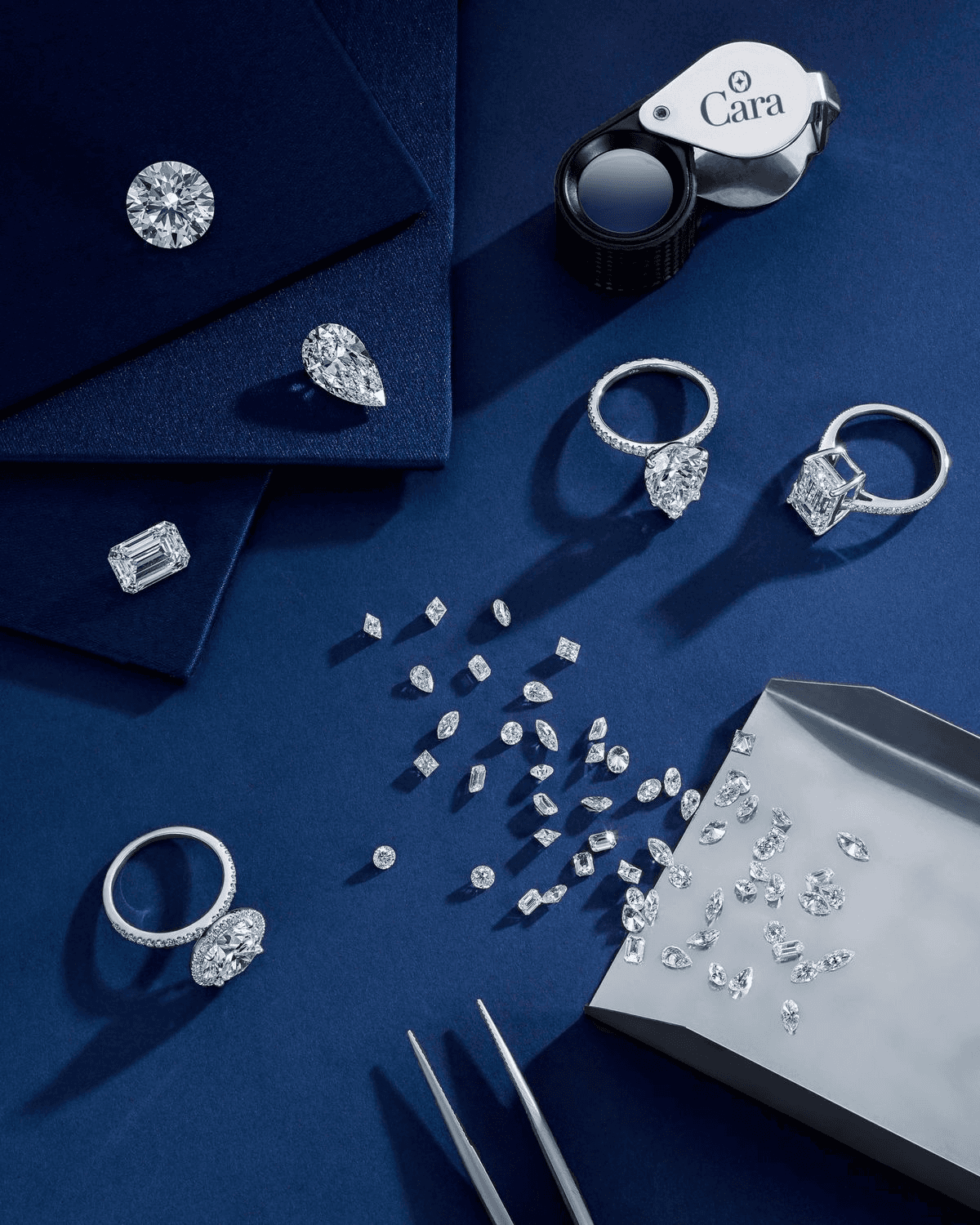
While round brilliant diamonds remain the most popular for their light performance, fancy shapes such as oval, emerald, cushion, and pear offer distinctive character.
Each shape interacts differently with the 4Cs, influencing perceived size, brilliance, and elegance. Shape selection is ultimately a matter of personal expression rather than hierarchy.
Certification: What Reports Do—and Do Not—Tell You
Third-party grading reports provide essential transparency, confirming a diamond’s characteristics and authenticity.
However, certificates cannot communicate how a diamond feels when worn, how it performs in real light, or how it complements a bespoke design. Certification should inform decision-making, not replace it.
Choosing a Diamond for Engagement Rings and Fine Jewelry
Diamonds chosen for daily wear should balance durability, comfort, and proportion.
For engagement rings, factors such as setting style, lifestyle, and long-term maintenance matter as much as the diamond itself. A thoughtful approach ensures beauty without compromise.
Why Bespoke Matters When Choosing a Diamond
Diamonds are often sold as interchangeable commodities. In reality, no two stones are identical.
A bespoke approach allows the diamond to guide the design—ensuring proportions, setting, and craftsmanship work in harmony. This results in jewelry that feels intentional, personal, and enduring.
Begin With Discernment
Understanding the 4Cs is not about mastering terminology. It is about learning which factors truly matter to you and selecting a diamond that aligns with your values, lifestyle, and sense of permanence.
Book a private consultation to explore diamonds selected with expertise, transparency, and an appreciation for lasting beauty.