JIUN Staff,
JANUARY 19, 2026
Understanding Emerald: Color, Character, and Natural Imperfection
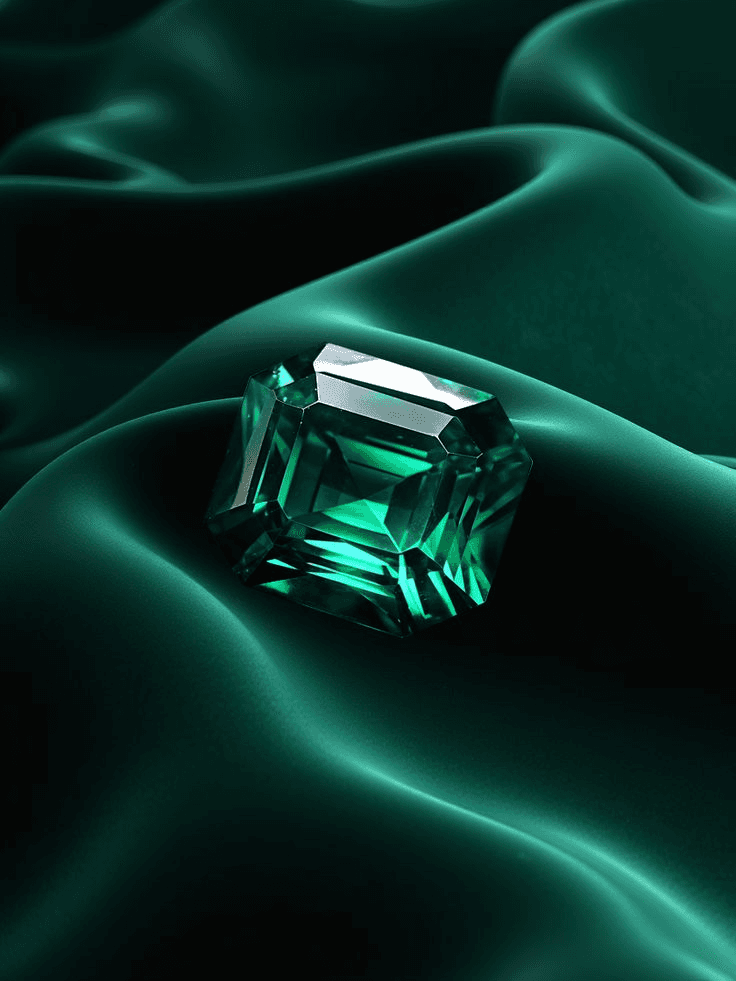
Emeralds are gemstones of presence rather than perfection. Celebrated for their unmistakable green color and natural inclusions, emeralds have long been admired not for flawlessness, but for character. To understand emerald is to appreciate rarity, natural formation, and the balance between beauty and integrity.
The Enduring Allure of Emerald
From ancient Egypt to European royal courts, emeralds have symbolized renewal, power, and wisdom. Cleopatra famously claimed emeralds as her own, while aristocracy and collectors prized them as emblems of discernment and status.
Unlike gemstones valued primarily for brilliance, emeralds captivate through depth of color and individuality. Each stone carries its own internal landscape, making emeralds as emotionally compelling as they are visually striking.
The Nature of Emerald: Understanding Natural Inclusions
Emeralds belong to the beryl family and are colored by trace elements such as chromium and vanadium. Their geological formation almost always results in internal inclusions, commonly referred to as jardin, or “garden.”
These inclusions are not defects; they are evidence of natural growth. In fact, an emerald without inclusions is exceedingly rare and often examined closely for potential treatment or synthetic origin. What matters is whether inclusions compromise durability—not whether they exist.
Treated vs. Untreated Emerald: What Buyers Should Know
Nearly all emeralds on the market undergo some level of clarity enhancement. This is not a modern shortcut, but a centuries-old practice that allows the stone’s natural beauty to be appreciated.
Oil Treatment Explained
Traditional oiling fills surface-reaching fissures with colorless oils or resins, improving transparency without altering the emerald’s inherent structure. Minor oiling is widely accepted within the fine jewelry world.
Untreated emeralds—those with no clarity enhancement—are exceptionally rare. Their value lies in scarcity rather than visual perfection.
Does Treatment Affect Value?
Treatment level matters more than treatment itself.
Emeralds with minor oiling can remain stable and valuable for generations. Moderate to heavy treatment may affect long-term durability and should always be clearly disclosed. Transparency and certification are essential when evaluating emerald treatment.
Understanding Emerald Quality: Color, Clarity & Cut
Emerald quality is assessed differently from diamonds or sapphires.
Color is the most important factor. The finest emeralds display vivid, saturated green with balanced tone—neither too dark nor overly light. A slight bluish undertone is often favored.
Clarity is judged with nuance. Inclusions are expected and accepted, provided they do not weaken the stone. An emerald’s beauty lies in harmony, not perfection.
Cut is chosen to preserve color and reduce internal stress. Emerald cuts are common not only for aesthetic reasons, but because they protect the gemstone’s natural structure.
Emerald Origin: When It Matters
Origin can influence both character and market perception, though it should never outweigh beauty.
Colombia: Known for rich, vibrant greens and historical prestige
Zambia: Valued for cooler, bluish-green tones and strong transparency
Brazil: Offers a wide range of lighter, crystalline greens
Origin becomes particularly meaningful when paired with strong color and minimal treatment. Still, a beautiful emerald should always be chosen for how it presents—not solely for its geographic label.
Choosing an Emerald for Fine Jewelry
Why Bespoke Matters When Working with Emeralds
Emeralds demand respect.
Their natural inclusions and relative sensitivity mean they should never be forced into generic settings. A bespoke approach allows proportions, structure, and color to guide the design, ensuring both beauty and longevity.
Thoughtful craftsmanship protects the stone while enhancing its character, creating jewelry that can be worn with confidence for years to come.
Begin with Understanding
Choosing an emerald is not about eliminating imperfections. It is about recognizing beauty shaped by nature and selecting a stone whose character resonates.
Book a private consultation to explore emeralds chosen with transparency, expertise, and an appreciation for natural rarity.