JIUN Staff,
JANUARY 19, 2026
Understanding Ruby: Color, Treatment, and the Myth of Perfection
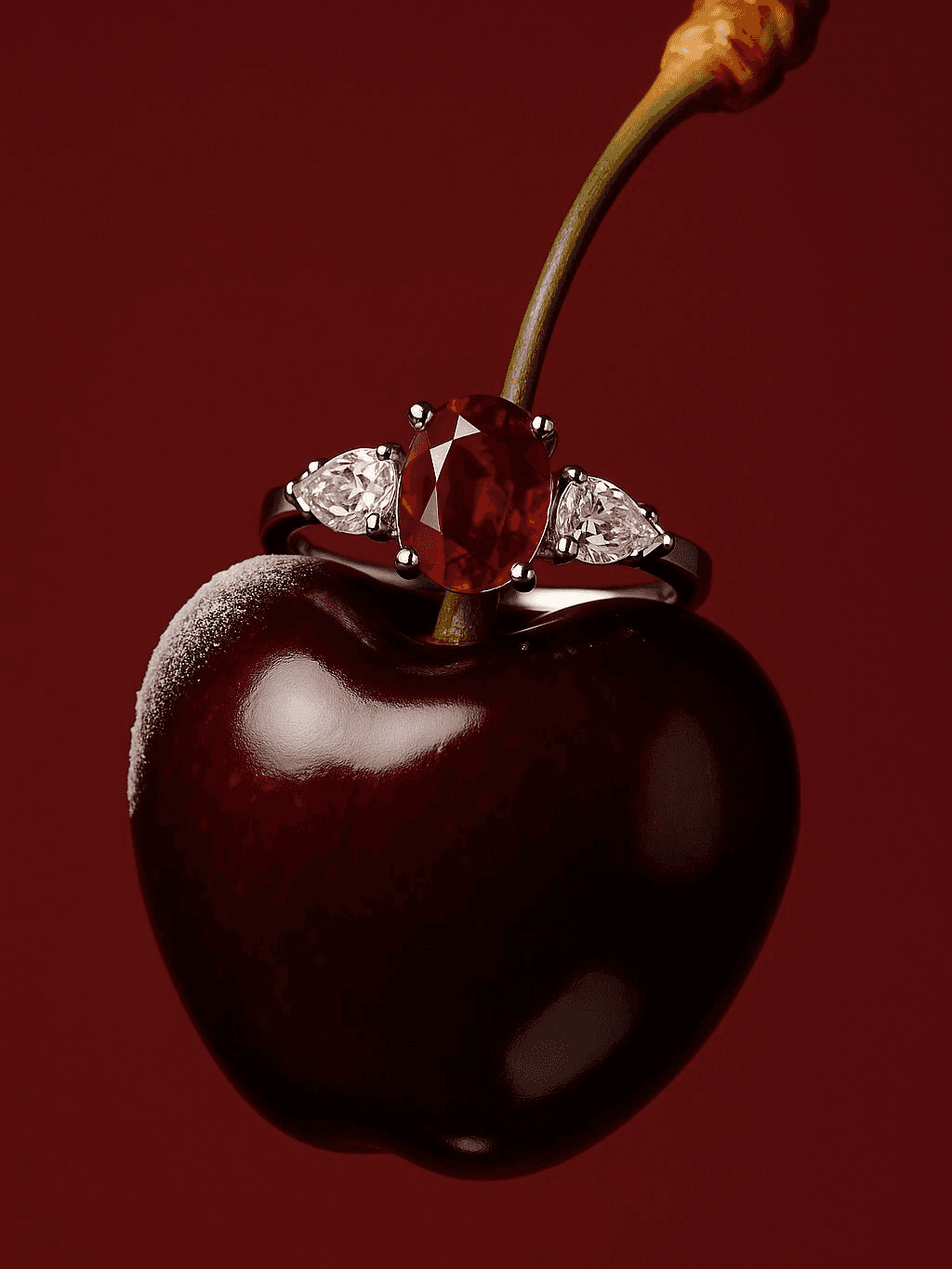
Rubies are defined by intensity. Long associated with passion, power, and vitality, fine rubies are among the rarest gemstones in the world. Unlike stones prized for brilliance alone, rubies are judged by the strength of their color, their natural formation, and the discernment required to recognize true quality.
To understand ruby is to move beyond labels and myths, and toward a deeper appreciation of rarity, treatment, and natural character.
Why Rubies Are Exceptionally Rare
Rubies belong to the corundum family, sharing the same mineral structure as sapphires. What distinguishes ruby is the presence of chromium, which gives the gemstone its red color.
The geological conditions required to produce a fine ruby are extraordinarily specific. Too little chromium and the stone appears pink; too much, and the color becomes dark or brownish. This narrow margin is why truly fine rubies are far rarer than most other gemstones, including diamonds.
Color Above All: Understanding Ruby’s True Value
Color is the single most important factor when evaluating a ruby.
The most sought-after rubies display a vivid, saturated red with a balanced tone—neither too dark nor too light. The term “pigeon blood” is often used to describe this ideal color, but it is widely misunderstood and frequently misapplied.
Rather than relying on terminology, experienced buyers evaluate how the ruby interacts with light, how evenly color is distributed, and whether the stone maintains intensity across different lighting conditions.
Heated vs. Untreated Ruby: What Buyers Should Know
Heat treatment is common in rubies and has been practiced for centuries. When properly disclosed, heating is widely accepted within the fine jewelry world and can improve color and clarity without compromising durability.
Untreated rubies—those that have not undergone heat or clarity enhancement—are exceptionally rare. Their value lies in natural scarcity rather than visual perfection.
Is an Untreated Ruby Always Better?
Not necessarily—but it is different.
An untreated ruby is prized for its rarity and natural state. Heated rubies, when responsibly treated and properly certified, can be equally beautiful and suitable for fine jewelry. What matters most is transparency, disclosure, and an understanding of what you are choosing.
Understanding Ruby Quality: Clarity & Cut
Unlike diamonds, rubies are not expected to be free of inclusions. Natural inclusions are common and accepted, provided they do not compromise durability.
Cut is selected to maximize color intensity rather than brilliance. A well-cut ruby enhances saturation and presence, while a poorly cut stone can appear dark or lifeless regardless of size.
Ruby Origin: Prestige, Perception, and Reality
Origin can influence value and collectability, but it should never outweigh beauty.
Burma (Myanmar): Historically associated with fine rubies of exceptional color and prestige
Mozambique: Produces vivid red rubies that have become highly regarded in modern fine jewelry
Madagascar: Offers a wide range of ruby characteristics, often with lighter tones
Origin becomes most significant when paired with strong color and minimal treatment. Still, a ruby should always be chosen for how it presents—not solely for its geographic origin.
Choosing a Ruby for Fine Jewelry
Rubies are often selected for statement pieces and heirloom jewelry, where intensity and presence take precedence.
For rings intended for regular wear, considerations such as setting design, durability, and treatment stability are essential. A thoughtful selection ensures the ruby can be worn and enjoyed with confidence.
Why Bespoke Matters When Working with Ruby
Rubies are not interchangeable.
A bespoke approach allows the stone’s color, proportions, and internal structure to guide the design. This ensures harmony between gemstone and craftsmanship, enhancing both beauty and longevity.
When handled with care and intention, ruby jewelry becomes more than an accessory—it becomes a legacy.
Begin with Understanding
Choosing a ruby is not about chasing labels or myths. It is about recognizing true color, understanding treatment, and selecting a stone that resonates with meaning and permanence.
Book a private consultation to discover rubies chosen for their intensity, rarity, and enduring significance.